
3. Try to use universally inclusive language
Shifting cultural attitudes typically inform common language, how we describe mental illnesses and how we address others.
As such, it has become imperative to adopt inclusive messaging when developing content oriented around mental illness and wellness.
E.g. Autistic people generally prefer to be directly labelled than generalized as being “on the spectrum.” Non-inclusive language excludes the client from the conversation and decreases their trust in treatment.
Use people-first language to emphasize the person before their illness or disability. E.g. A person who has depression over “a depressed person.”
Avoid using exclusionary language that doesn’t take gender and culture into consideration, such as “you guys,” “mankind,” "manmade," "grandfathered,” etc.
Alternative phrases like “you all” or “folks,” “humankind,” “artificial,” and “legacy” are inclusive and portray the same meaning.
Flags for consideration
Consult people with lived experiences to clarify how to describe them and their conditions. E.g. Ask people for their pronouns before describing them.
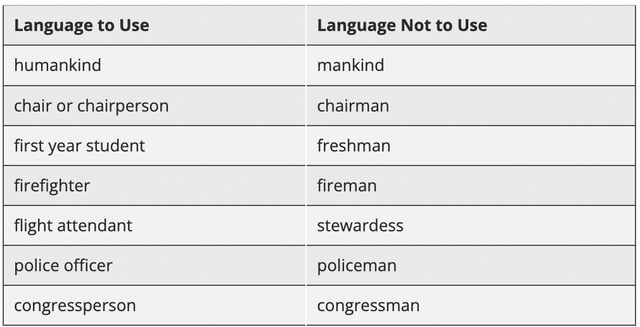
An excerpt from the University of Washington’s IT Inclusive Language Guide.
Suggested additional resources
Inclusive tech language resource. i.e., replace whitelist and blacklist with allow list and deny list: itconnect.uw.edu
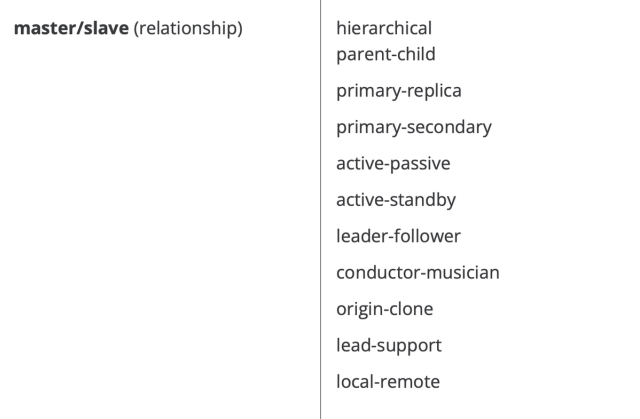
An excerpt from the University of Washington’s IT Inclusive Language Guide.